UW-Madison's First Chip Design Club

What We Do

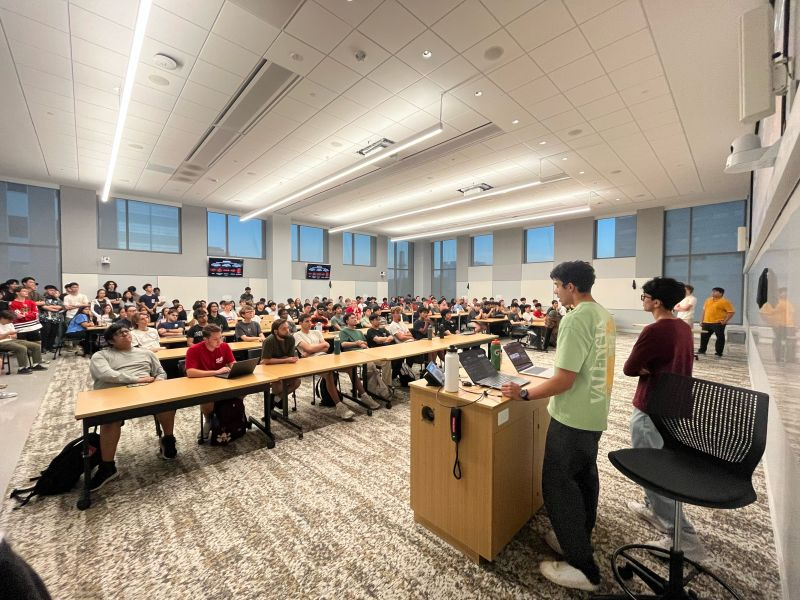
Chip design is one of the most important and rapidly growing fields in the world right now, but it also has one of the highest barriers to entry, making it difficult for college students to gain hands-on experience. SiliconBadgers aims to change that by making chip design more accessible to students of all experience levels. We teach the fundamentals of digital design, verification, and the chip development process, while bringing in guest speakers from companies such as NVIDIA and AMD to share their experiences working in the industry. As members build their skills, we will work toward designing and verifying a chip of our own.

Why Join

Whatever year you're in, Silicon Badgers gives you real, hands-on experience you can't get in a classroom alone.

01

Underclassmen

Get an early, hands-on introduction to digital logic and chip design — years before most students see this material. Build a strong foundation and a head start on your degree and career path.

02

Upperclassmen

Apply your coursework to a real ASIC design project, build a portfolio that stands out for internships and full-time roles, and work alongside a team on something that ships.

03

Grad Students

Get experience actually designing chips and leading teams through the design process — plus direct industry connections. A great way to mentor undergrads while sharpening your own leadership and technical depth.

Leadership

Rohan Sharma

Rohan Sharma

Founder / President

rsharma232@wisc.edu

Bilal Usman

Bilal Usman

Co-Founder / Vice President

busman4@wisc.edu

Aaron Diong

Aaron Diong

Co-Founder / Vice President

diong@wisc.edu

Soham Gupta

Soham Gupta

Co-Founder / Vice President

sgupta422@wisc.edu

FAQ

Do I need prior experience to join? +
Not at all. Silicon Badgers is built for beginners — Fall 2026 is entirely focused on teaching the fundamentals of digital logic and ASIC design from the ground up.
What will I actually learn and be able to do? +
You'll learn digital logic design, RTL coding in Verilog/SystemVerilog, simulation and verification, and the full ASIC design flow from RTL to tapeout using industry-standard EDA tools. By spring, you'll apply all of it to design a real chip as part of a team.
Is this open to all majors and class years? +
Yes. While the material draws on electrical/computer engineering and computer science concepts, we welcome students from any major and any year — undergrad or grad — who are interested in chip design.
How do I join? +
Fill out the Google Form and join the Slack.
Who do I contact if I have questions? +
Feel free to email Rohan Sharma at rsharma232@wisc.edu.